47.4%
Stats SA QLFS, Q2 2026
youth unemployment, ages 15 to 34

2030 BY 2030 | NATIONAL DIGITAL INCLUSION AND SOCIO-ECONOMIC DEVELOPMENT INITIATIVE
A proven, costed way for corporate South Africa to turn social investment into working Digital Learning Laboratories in public high schools.
Young South Africans are entering an economy shaped by automation and artificial intelligence. Youth unemployment is 47.4%. The skills they need start in a classroom that works. Lab 001 at Phefeni Senior Secondary School in Soweto shows a laboratory can be built, handed over and sustained.
2,030 Digital Learning Laboratories by 2030. One national mission.
Implemented by 1ICT, B-BBEE Level 1 | Lab 001 delivered February 2026 | Contributing to the priorities of the DBE and WEF South Africa Education Accelerator
Lab 001, Phefeni Senior Secondary School, February 2026
47.4%
Stats SA QLFS, Q2 2026
youth unemployment, ages 15 to 34
36.4%
Stats SA QLFS, Q2 2026
of 15 to 24-year-olds not in employment, education or training
39%
WEF Future of Jobs Report 2025
of workers’ core skills expected to change by 2030
464
DBE dataset, July 2026
high schools offering Civil, Electrical or Mechanical Technology, every specialisation software-dependent
A laboratory opens a pathway. It does not replace an economy that creates jobs, which is why every laboratory is maintained by a local Black-owned ICT business.
Your company has a transformation strategy. What is its measurable contribution to South Africa’s digital future?
The skills gap we fail to address in today’s classrooms becomes the talent shortage businesses face tomorrow.
By 2030, will your organisation be able to show which schools, learners and communities it helped prepare for the digital economy?
Targets 4.a and 4.4: effective learning environments and relevant skills for employment
National Development Plan 2030 and the Medium-Term Development Plan 2024 to 2029, the final medium-term plan before the 2030 deadline.
South Africa Education Accelerator, launched 28 May 2026 by the DBE and the World Economic Forum, co-chaired by Minister Siviwe Gwarube and Phuthi Mahanyele-Dabengwa.
2030 by 2030 is an independent programme delivered by 1ICT. It contributes to these priorities and is not endorsed by the World Economic Forum.
Every route starts with a signed agreement, an itemised budget and a school that signs for what it receives.
Appoint 1ICT to implement a defined Digital Learning Laboratory on your behalf. The school and its community are the beneficiaries. This is the model used for Lab 001: Microsoft South Africa funded it and 1ICT implemented it.
Contributions may be structured for recognition under applicable B-BBEE elements, subject to the nature of the contribution, eligibility, evidence requirements and independent verification.
For companies with charitable giving policies. Gifts are routed through a non-profit partner to fund qualifying educational activities. Eligibility for any tax treatment is confirmed per donation and recipient.
R100,000 to R180,000 per laboratory per year. Support, licensing, refresh and educator upskilling, delivered by a local Black-owned ICT business under an SLA held by 1ICT. How this spend is treated under B-BBEE, for example enterprise and supplier development or procurement, is assessed separately by your verification agency. It is not SED by default.
Investments can be structured over 1 to 4 years, with payment and laboratory delivery schedules agreed upfront. The amounts shown are total commitments, not annual amounts.
| Commitment | Laboratories | Investment |
|---|---|---|
| Lab Partner | 1 laboratory | R1.3m refurbishment or R2.2m new build |
| Cluster Partner | 3 laboratories | R6.6m |
| Provincial Anchor | 5 to 10 laboratories | R11m to R22m |
| Founding National Partner | 15 or more laboratories | From R33m |
All figures in constant 2026 rand, excluding VAT. Cluster Partner, Provincial Anchor and Founding National Partner use the full new-build cost of R2.2m per laboratory. Investments can be structured over 1 to 4 years, with payment and laboratory delivery schedules agreed upfront. The amounts shown are total commitments, not annual amounts.
The national target: R3,187,100,000 (R3.19 billion) to deliver and refurbish 2,030 Digital Learning Laboratories by 2030 — a blended programme average of R1.57m per school (70% refurbishment, 30% new build).
SED target 1.5% of net profit after tax.
Maximum 12 points.
SED target 1% of net profit after tax.
Maximum 5 points.
Maximum points are subject to independent verification. Recognition requires qualifying contributions to communities where at least 75% of beneficiaries are Black people (below that, the contribution is pro-rated), and is confirmed by your verification agency.
Enter your company’s annual NPAT.
Indicative SED target
Not calculated
Maximum points: 12
Enter NPAT to calculate an indicative target and laboratory equivalent.
Planning illustration only. Actual targets, recognition and points depend on the applicable code, entity classification, qualifying expenditure, measurement period and verification. Where profit is low relative to industry norms, the codes set a turnover-based target. Your verification agency confirms the figures.
Proof of delivery · Lab 001
Phefeni Senior Secondary School, Soweto. Delivered February 2026.

What was delivered
Full laboratory refurbishment
Track A refurbishment
Managed fibre connectivity
Managed connectivity
Access control and CCTV
Physical security
Microsoft 365 Education
Full deployment
Managed support SLA
Ongoing helpdesk + on-site
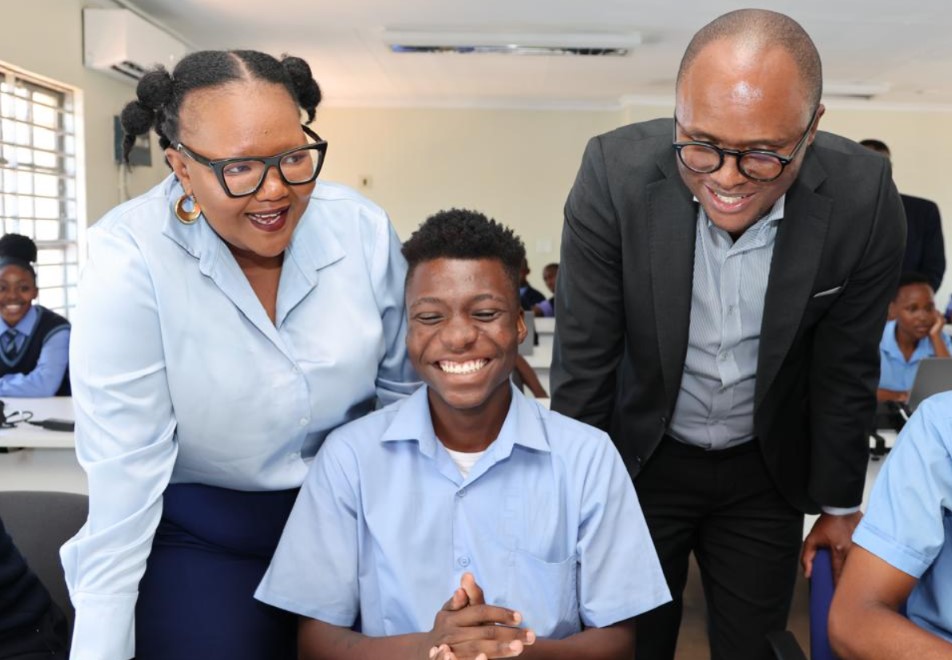
The handover : February 2026
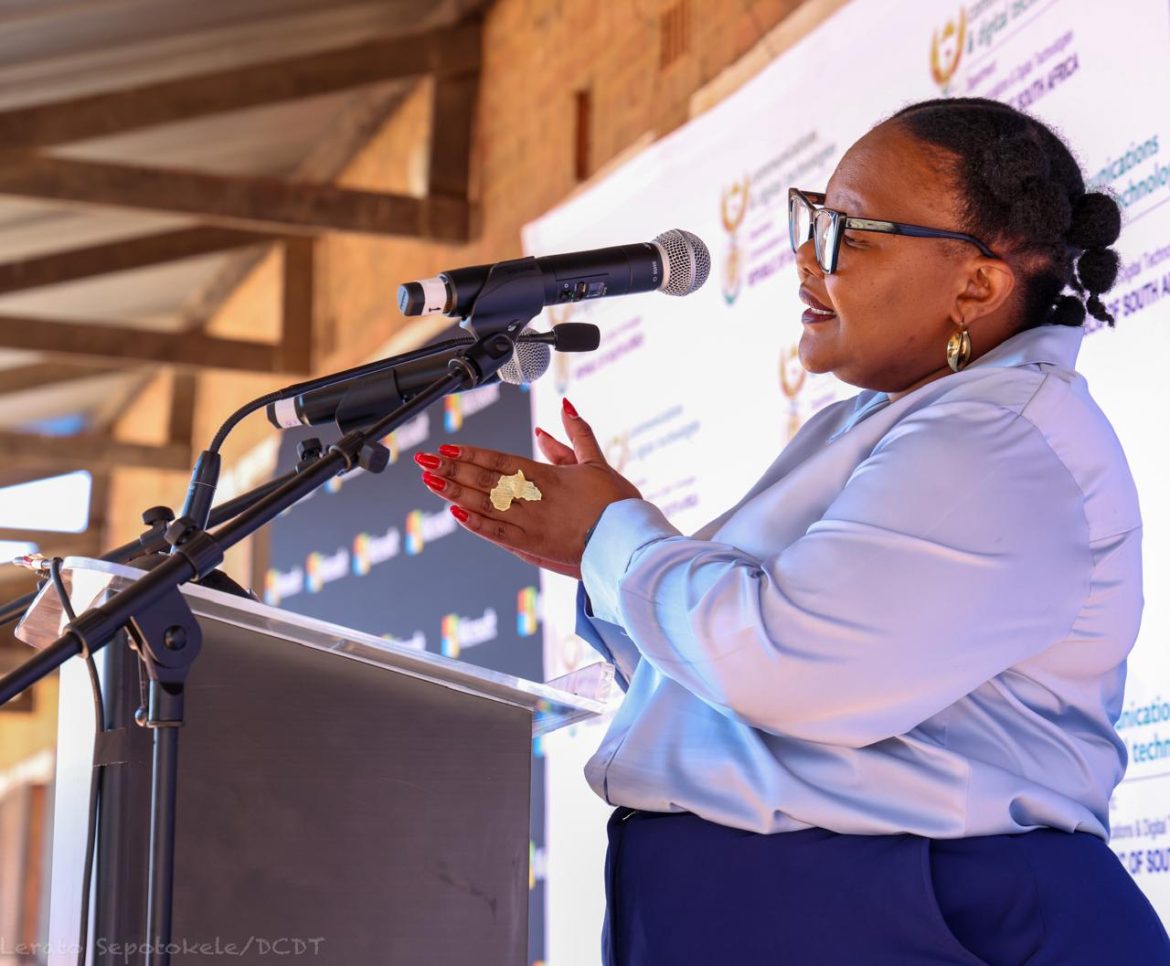
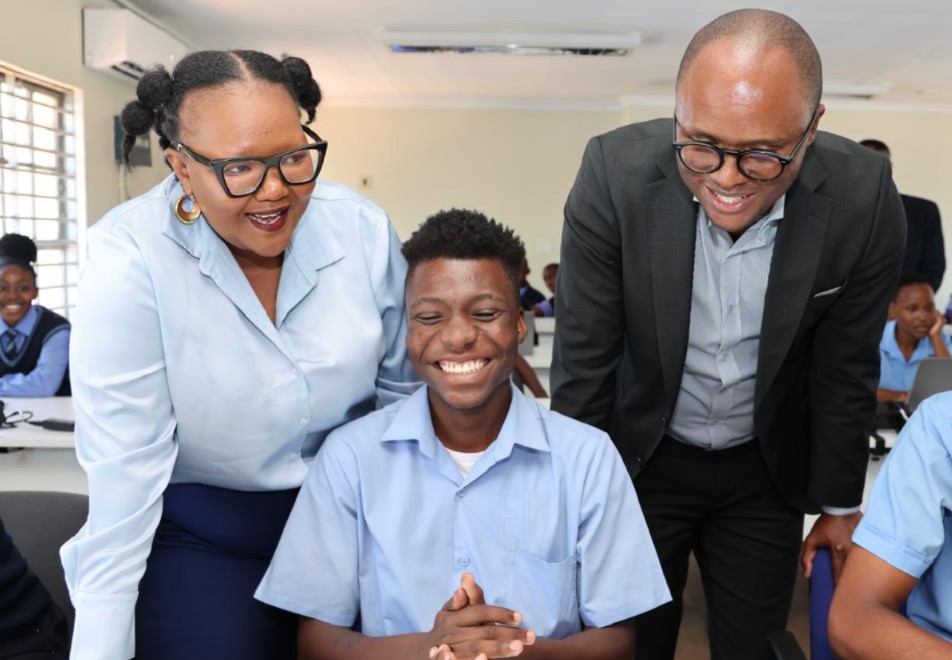
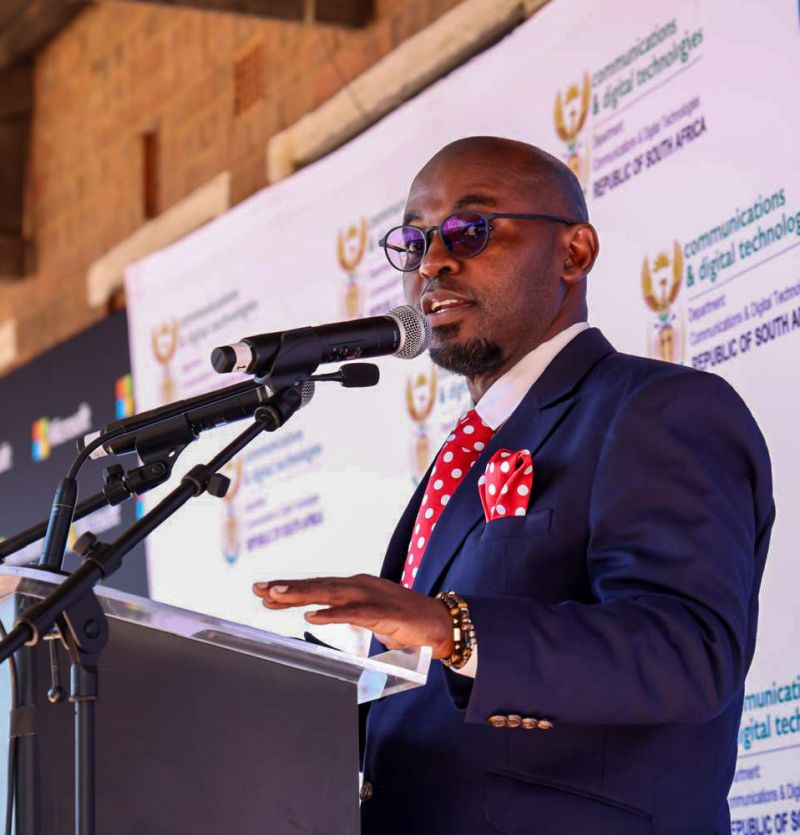
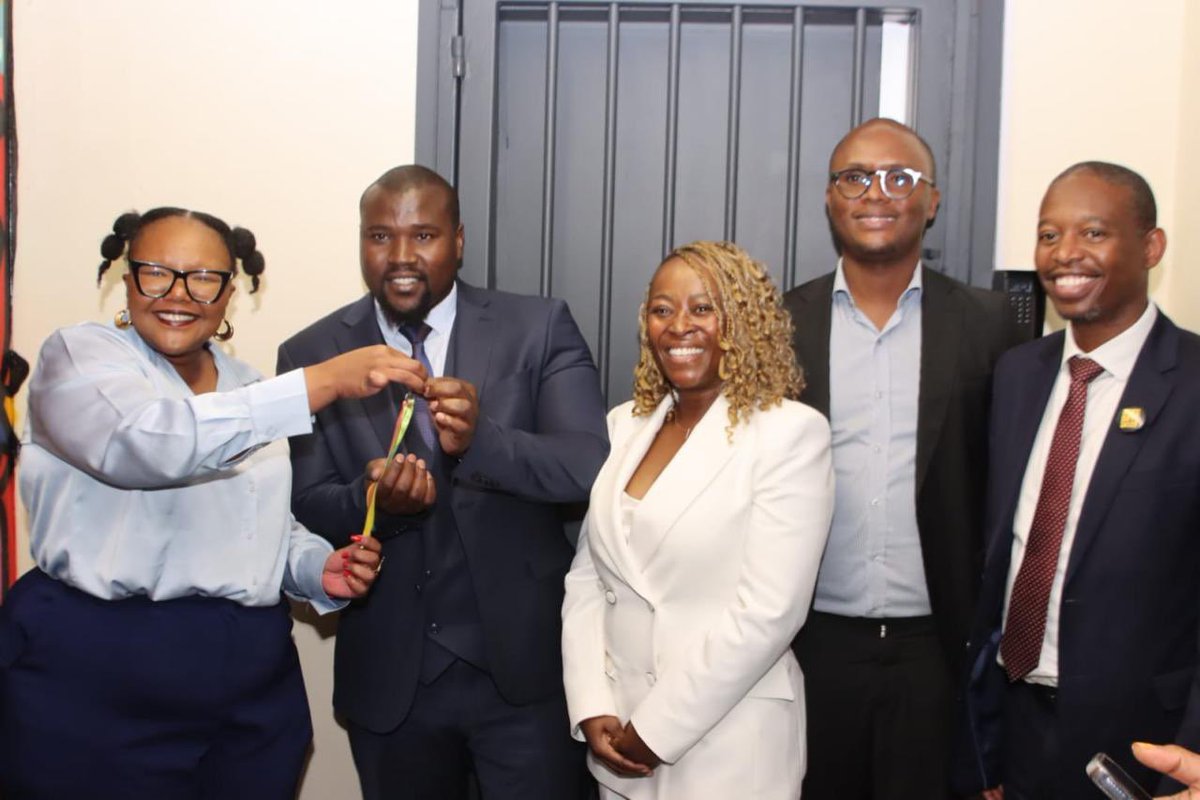
Handover ceremony : Phefeni Senior Secondary School, Soweto. In attendance: Minister Siviwe Gwarube (Basic Education) and Minister Solly Malatsi (Communications & Digital Technologies).
Photography: Lenola Sepotokele / DCDT
Independent coverage of the Phefeni digital lab handover:
These reports cover the handover and its partners; they do not name 1ICT or independently verify 1ICT's role.
Lab 001 was made possible by:
Funded by Microsoft South Africa. Implemented by 1ICT.
Beneficiaries: the school, its learners and its community.
February 2026
464 technical schools: 2027 target cohort (DBE dataset, July 2026)
2026
School nominations, needs assessment and partnership structuring, building on Lab 001.
2027
2027 target cohort (DBE dataset, July 2026): 464 schools offering Civil, Electrical or Mechanical Technology.
2028
Expand delivery with a planned provincial Black-owned ICT partner network.
2029
Continue phased laboratory delivery, support and impact reporting.
2030
The programme target: 2,030 Digital Learning Laboratories.
Every rand invested in the 2030 programme creates two distinct transformation impacts : one in the classroom, one in the local economy.
Every 1ICT implementation is governed by a documented delivery framework , from school assessment to final impact report. Corporate funders receive structured accountability at every stage.
Our governance pack , including the implementation framework, sample SLA, and delivery budget template , is available on request. We welcome structured procurement processes and formal proposal submissions.
1ICT is not a charity. We are a B-BBEE Level 1 South African ICT company with demonstrated delivery capability across enterprise clients, government departments, and now public education. We hold the SLA. We are accountable.
45-minute Teams briefing · All times SAST · Subject to the Programme Manager’s approval
Select an available day.
Request structured documentation for internal circulation, built for CSI, procurement, legal, and Exco review.
For companies considering national, provincial or multi-school participation. We come to you.
Ready to fund a specific lab? Scroll down to select your partnership pathway and submit your details.
Get started →Know a school in your area that needs a digital lab? Submit a nomination and our team will assess it.
A leadership commitment records your intent. It becomes binding only through a signed implementation agreement. We recognise partners publicly only with written permission.